

Projects live or die by how well you manage change. 88% of projects with excellent change management meet their objectives, compared to just 13% with poor change management. That gap is not a minor inconvenience; it is the difference between transformation and a costly write-off. In this article, we examine real-world case studies where change management made or broke multi-million-pound initiatives, extract the lessons that matter most, and give you a practical framework to apply from your next project kickoff.
Table of Contents
- What makes change management succeed or fail?
- Case studies: Change management wins and losses
- Lessons learned from change management failures
- When and how to implement effective change management
- Why most change management guides miss the human factor
- Boost your project outcomes with expert-guided change
- Frequently asked questions
Key Takeaways
| Point | Details |
|---|---|
| Success depends on people | User training and early involvement are the greatest determinants of successful change management. |
| Investing yields high ROI | Companies see up to 7 times better returns and higher project success rates with strong change management. |
| Learn from failure | Not addressing resistance and governance issues leads to costly setbacks, as proven by real-world cases. |
| Frameworks guide, but don’t guarantee | No framework works without attention to practical and emotional realities on the ground. |
What makes change management succeed or fail?
Now that we understand the stakes, let us clarify which elements truly drive or undermine change management success. Most leaders assume technology or budget is the decisive factor. In practice, it is always people and process.
The five critical success factors are:
- Executive sponsorship — Senior leaders must visibly champion the change, not just sign off on it.
- User training — Equipping every affected team member before go-live, not after.
- Resistance management — Actively identifying and addressing opposition at every level.
- Governance — Clear decision-making structures, escalation paths, and accountability.
- Stakeholder involvement — Bringing the right voices in early, especially those closest to daily operations.
The financial case is compelling. Effective change management delivers a 143% ROI compared to 35% without it, according to McKinsey research, with a 3:1 to 7:1 return depending on project complexity.
| Factor | Excellent change management | Poor change management |
|---|---|---|
| Objectives met | 88% | 13% |
| On or under budget | 1.5x more likely | Baseline |
| On or ahead of schedule | 5x more likely | Baseline |
| ROI | Up to 143% | ~35% |
In high-risk environments such as ERP rollouts or mergers and acquisitions, governance and executive sponsorship become even more critical. These are the scenarios where a single missed escalation or a disengaged sponsor can unravel months of work. Defining project requirements for AI systems or complex integrations adds another layer of risk if change management is treated as an afterthought.
Pro Tip: Do not rush user training. Schedule it close enough to go-live that skills remain fresh, but with sufficient runway to address gaps before they become crises.
Case studies: Change management wins and losses
Next, let us see what happens when organisations apply or ignore these critical elements. Real-world examples are far more instructive than theory alone.
Lidl's €500 million SAP collapse
Lidl invested heavily in a SAP retail management system, intending to replace its legacy pricing infrastructure across Europe. The project ran for years before being abandoned at a €500M loss. The core failure was not technical. Lidl's existing processes were deeply embedded in its culture, and the organisation resisted adapting to SAP's standard workflows. Executive alignment was weak, training was inadequate, and there was no structured approach to managing resistance.
Gifi's ERP migration breakdown
French retailer Gifi attempted an ERP migration that collapsed under the weight of poor preparation. Inadequate user training and flawed governance meant frontline staff were unable to operate the new system effectively at launch. The project team prioritised technical delivery over people readiness, which is a pattern that repeats across failed transformations.
What a disciplined approach achieves
Contrast those failures with organisations that front-load change management investment. In environments where steering committees meet regularly, user champions are embedded in each department, and training is validated before go-live, adoption rates consistently exceed 85% within the first quarter.

| Approach | Outcome | Key misses or wins |
|---|---|---|
| Lidl SAP rollout | €500M written off | No process flexibility, weak executive alignment |
| Gifi ERP migration | System abandoned post-launch | Ignored user readiness, tech-first mindset |
| Disciplined CM approach | 85%+ adoption in Q1 | Early stakeholder buy-in, validated training |
Key lessons from each case:
- Cultural fit must be assessed before technology selection, not after.
- User training cannot be compressed into the final sprint.
- Executive sponsors need active roles, not ceremonial ones.
- Governance gaps allow small problems to become critical failures.
Studying multi-project management examples reveals that these failures are not isolated. They reflect systemic blind spots that appear across industries and project sizes.
"The technology was ready. The people were not. That is almost always the real story behind an ERP failure."
Lessons learned from change management failures
With these examples in mind, what clear preventable mistakes appear again and again? The patterns are consistent, which means the solutions are too.
Zimmer Biomet's SAP implementation is a textbook case. The medical device company experienced a $172M loss attributed to poor governance, sole-sourcing decisions, leadership turnover during the project, and a rushed go-live. Weak change management was cited as a primary contributor. The organisation did not have the structures in place to absorb the scale of change required.
The recurring failure points across Lidl, Gifi, and Zimmer Biomet are:
- Poor governance — No clear escalation paths or accountability at the programme level.
- Skipped or compressed training — Users unprepared at go-live, leading to errors and rejection.
- Absent executive buy-in — Sponsors who approve budgets but disengage from delivery.
- Technical obsession — Treating system readiness as project readiness.
- Insufficient communication — Teams learning about changes reactively, not proactively.
Here is how to counter each of these:
- Establish a governance board with defined escalation criteria before the project begins.
- Build training validation checkpoints into your schedule, not just delivery dates.
- Assign executive sponsors a visible, regular role in project communications.
- Measure people readiness alongside technical readiness at each milestone.
- Create a communication calendar from day one covering all impacted stakeholders.
Exploring successful PMO use cases shows how a structured PMO environment embeds these disciplines automatically, reducing reliance on individual discipline alone. Pairing that with AI project tracking strategies gives you real-time visibility into where adoption is lagging before it becomes a crisis.
Pro Tip: Establish user feedback loops from the very start of your project. Collecting sentiment data at regular intervals lets you course-correct early. Late input almost never prevents disaster; it only documents it.
When and how to implement effective change management
Having examined the pitfalls, it is time to focus on proactive approaches to make change stick and deliver value. The first question leaders ask is: when does formal change management become essential?
The answer is straightforward. You need structured change management whenever the project requires people to work, think, or operate differently. That includes:
- Mergers and acquisitions — Culture, process, and system integration all require coordinated change.
- ERP and platform rollouts — High complexity, high resistance risk, long adoption cycles.
- Digital transformation programmes — Broad impact across departments with varying levels of digital readiness.
- Culture change initiatives — Long timelines, high dependency on leadership behaviour, difficult to measure.
Once you have identified that formal change management applies, the implementation framework follows a clear sequence:
- Plan — Define the change vision, assess impact, identify stakeholders, and map resistance risks.
- Communicate — Launch a structured communication plan before, during, and after go-live.
- Train — Deliver role-specific training with validation, not just attendance records.
- Sustain — Monitor adoption post-launch and address resistance that emerges in the first 90 days.
The scale of your change management investment should match the risk profile. A small process change in one team needs a lighter approach than a cross-organisational ERP rollout. The discipline stays the same; the depth adjusts. Projects with excellent change management are five times more likely to finish on or ahead of schedule. That kind of return justifies serious investment in getting the approach right from the start.
Building this structure into your project governance from the proposal stage, using a solid project proposal template, ensures change management is never treated as optional.
Why most change management guides miss the human factor
Here is the uncomfortable truth: most change management frameworks are written as if people respond to logic. They do not. People respond to emotion, habit, and trust. You can follow every procedural step in the PROSCI model, complete every Gantt milestone, and still watch a rollout fail because a team leader quietly told their staff the new system was "management's problem, not ours."
We have seen projects where governance was exemplary, training was documented, and communications were frequent. And yet adoption was barely 40% six months post-launch. Why? Because no one measured sentiment. No one asked frontline staff whether they felt heard or equipped. The metrics looked healthy; the people did not feel it.
The PMO features for change that matter most are not just dashboards and workflows. They are the mechanisms that surface human signals early, track sentiment alongside status, and allow you to respond before disengagement becomes irreversible. Involve frontline staff from the first sprint, not the last. Use iterative feedback, not just post-implementation surveys. Frameworks set the structure. People make it real.
Boost your project outcomes with expert-guided change
If you are ready to move from lessons to action, expert support and proven structures can make the difference between a transformation that sticks and one that stalls.
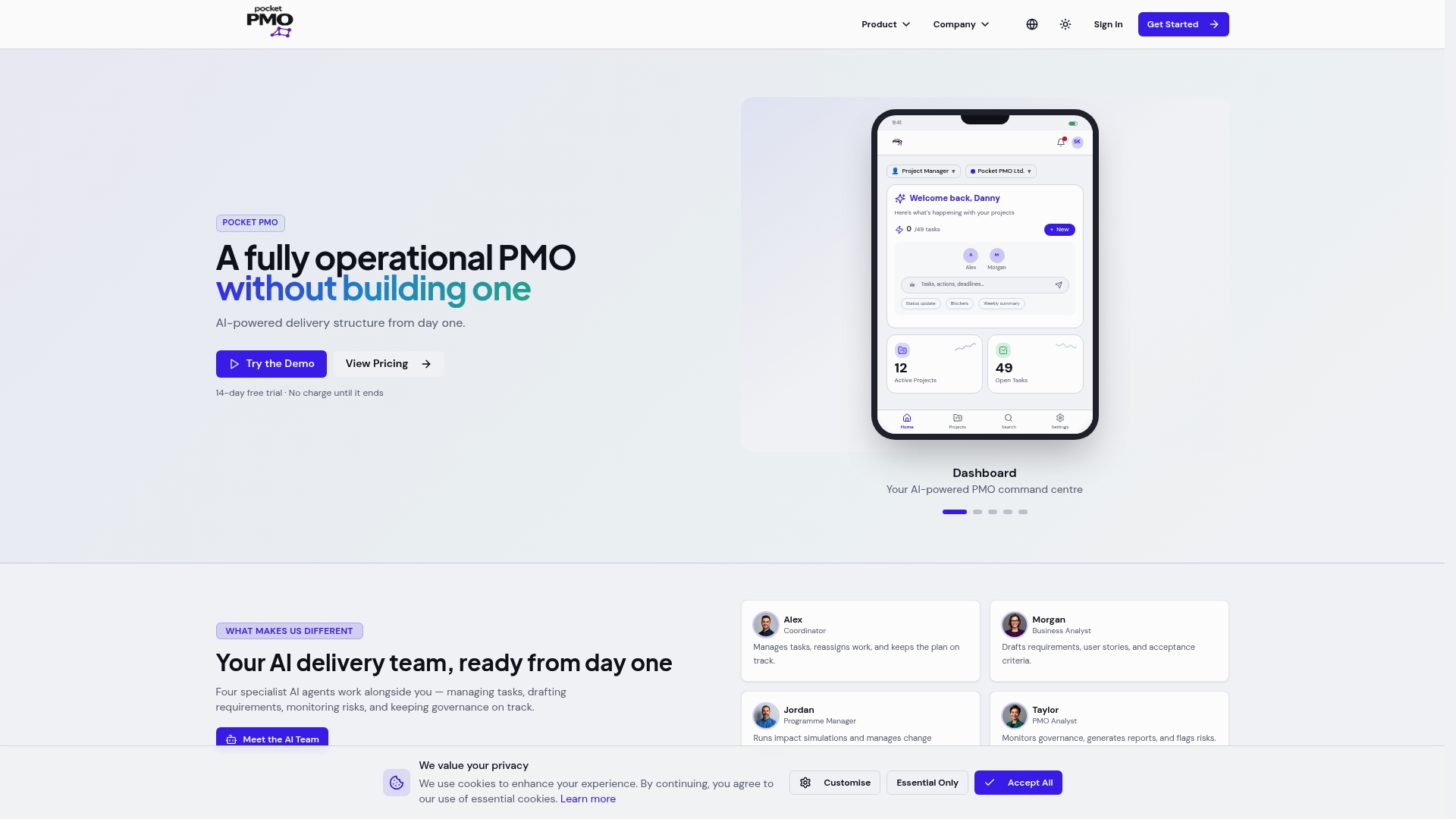
Pocket PMO gives you AI-powered governance, real-time project visibility, and intelligent change request workflows built in from day one. You do not need to build your own PMO or piece together disparate tools. Whether you are managing an ERP rollout, a digital transformation, or a multi-site programme, you can launch your Pocket PMO with the structure already in place. Take a look at the full range of capabilities and explore features to see how curated frameworks reduce adoption risk and accelerate delivery confidence across your portfolio.
Frequently asked questions
What is a real-world example of change management?
Lidl's failed €500M SAP rollout is a classic example, where poor executive alignment and resistance to new processes led to project collapse. It illustrates precisely what happens when change management is treated as secondary to technical delivery.
Why do change management projects fail?
Projects frequently fail due to poor user training, weak governance, lack of executive sponsorship, and underestimating how strongly people resist unfamiliar processes. The technology is rarely the primary cause.
How does good change management impact project ROI?
Effective change management can deliver a 3:1 to 7:1 return on investment, with projects far more likely to meet objectives, stay within budget, and complete on schedule.
What is the most important factor in managing change?
User training and active involvement are the most critical factors. Projects consistently fail when people are not equipped or genuinely willing to adopt new ways of working before go-live.
When should organisations invest in formal change management?
Formal change management is essential during major transformations such as mergers, ERP system rollouts, or culture change initiatives where broad adoption and behavioural shift are required for success.
Recommended
- Master the multi-project management process: boost success
- Project tracking with AI: strategies for better results
- Pocket PMO | A fully operational PMO without building one
- Why manage project requirements effectively for AI success
- Insurance Change Management: How It Drives P&C Transformation - Digital Insurance Platform | IBSuite Insurance Software | Modern Insurance System
- Verandermanagement: tips voor een soepele overgang - Informatiegidsen Nederland