

Inconsistent project proposals cost organisations more than just time. They create confusion, delay approvals, and leave stakeholders second-guessing whether a project is worth backing. For project managers and business analysts at mid-sized organisations, this is a familiar frustration. The good news is that a well-structured project proposal template eliminates most of this friction. Standardised initiation processes directly improve on-time and on-budget delivery rates. This guide walks you through why templates matter, what they should contain, how to use them effectively, and how to avoid the pitfalls that undermine even the best intentions.
Table of Contents
- Why structured project proposal templates matter
- Key components of an effective project proposal template
- How to use a project proposal template step by step
- Common mistakes and how to avoid them
- Why most project proposal templates fail—and how to get it right
- Streamline your proposals with Pocket PMO
- Frequently asked questions
Key Takeaways
| Point | Details |
|---|---|
| Templates drive project success | Using structured templates increases project completion rates and boosts stakeholder confidence. |
| Include essentials | A good proposal template covers objectives, scope, costs, risks, and metrics for success. |
| Review and involve stakeholders | Engage stakeholders early and continually improve your templates for optimal results. |
Why structured project proposal templates matter
A project proposal is not just a formality. It is the first opportunity to demonstrate that a project is viable, well-considered, and worth investment. Without a consistent structure, proposals vary wildly in quality, and stakeholders spend more time asking questions than making decisions.
Structured templates solve this by setting a clear standard. Every proposal covers the same critical ground: objectives, scope, costs, risks, and success measures. Stakeholders know exactly where to look for the information they need. Approvals move faster. Misalignment is caught earlier. The proposal standardisation benefits extend well beyond individual projects, building organisational maturity over time.
The data supports this. Higher on-time and on-budget completion rates are consistently linked to organisations that use standardised initiation processes, according to PMI research. That is not a marginal improvement. It represents a meaningful shift in how reliably projects are delivered.
Informal proposals, by contrast, introduce avoidable risk. Common pitfalls include:
- Vague objectives that shift during delivery
- Undefined scope, leading to scope creep and budget overruns
- Missing risk assessments, leaving teams unprepared for setbacks
- No success criteria, making it impossible to measure outcomes
- Inconsistent formatting, slowing stakeholder review
Each of these issues is preventable with a solid template in place. The template acts as a checklist, a communication tool, and a governance mechanism all at once.
"A proposal template is not a constraint on creativity. It is a scaffold that ensures nothing important is left out, and that every decision-maker receives the same quality of information."
Pro Tip: Introduce a single, agreed template across your team and revisit it after every major project. Consistency compounds over time, and each iteration makes the next proposal faster and stronger.
Key components of an effective project proposal template
Not all templates are created equal. A minimalist template might capture the basics, but it often leaves gaps that cause problems later. A well-designed template balances thoroughness with usability, giving you enough structure without becoming a bureaucratic burden.

Standardised templates improve both project delivery and stakeholder communication, which means the sections you include directly affect outcomes. Here is a comparison of minimalist versus comprehensive templates:
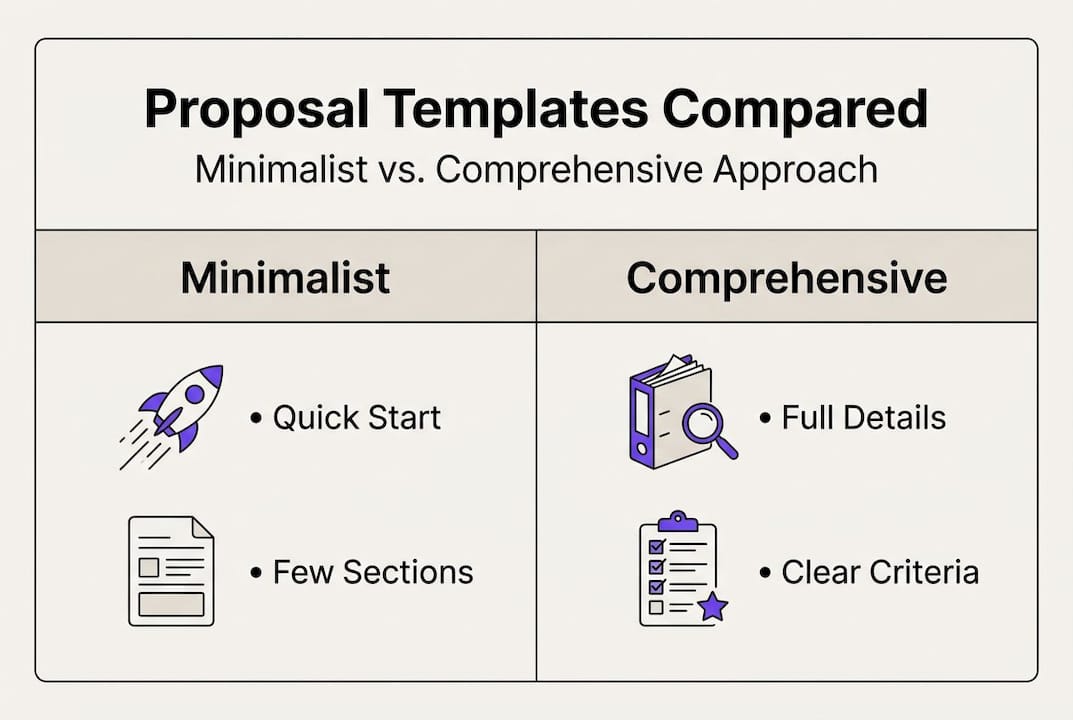
| Section | Minimalist template | Comprehensive template |
|---|---|---|
| Project objectives | Brief summary | SMART objectives with measurable targets |
| Scope | High-level description | Inclusions, exclusions, and boundaries |
| Timeline | Estimated dates | Phased milestones with dependencies |
| Budget | Total cost estimate | Itemised costs with contingency |
| Risks | Optional | RAID log with mitigation strategies |
| Roles and responsibilities | Not included | RACI matrix |
| Success criteria | Not included | KPIs and acceptance criteria |
The comprehensive approach takes more effort upfront, but it pays dividends throughout delivery. Stakeholders are better informed, decisions are faster, and the project team has a clear reference point throughout.
Must-have sections in any project proposal template:
- Executive summary
- Project objectives and business case
- Scope definition
- Timeline and milestones
- Budget and resource requirements
- Risk and dependency overview
- Success criteria and KPIs
- Roles and responsibilities
Nice-to-have sections for more complex projects:
- Stakeholder map
- Assumptions log
- Change management approach
- Benefits realisation plan
You can review the PMO feature checklist to see how these components align with a structured project management framework. Tailoring your template to your organisation's size, sector, and governance requirements ensures it remains practical and relevant rather than a document that gathers dust.
How to use a project proposal template step by step
Having a template is only half the battle. Using it well is what drives results. Embedding templates in initiation processes measurably improves approval times and project outcomes, so the process you follow matters as much as the document itself.
Here is a practical step-by-step approach:
- Define the project context. Before filling in a single field, clarify the problem you are solving and the outcome you are targeting. This shapes every other section.
- Complete the objectives and scope. Write SMART objectives. Define what is in scope and, critically, what is out of scope. This prevents misunderstandings later.
- Build the timeline. Map out key phases and milestones. Identify dependencies and flag anything that could affect delivery dates.
- Estimate costs and resources. Break the budget into categories. Include contingency. Identify the team members and external resources required.
- Assess risks and dependencies. Use a RAID log format to capture risks, assumptions, issues, and dependencies. Assign owners to each item.
- Define success criteria. Agree on what good looks like before the project starts. Link success measures to the original business case.
- Review with stakeholders. Share a draft early. Incorporate feedback before final submission. This step alone prevents most approval delays.
- Submit and track. Once approved, use the proposal as a baseline for tracking progress throughout delivery.
You can explore template adoption best practices to see how leading teams embed this process from day one. For those managing multiple concurrent projects, multi-project proposal tips offer additional guidance on scaling the approach.
| Approach | Average approval time | On-time delivery rate |
|---|---|---|
| No template used | 4 to 6 weeks | 52% |
| Minimalist template | 2 to 4 weeks | 64% |
| Comprehensive template | 1 to 2 weeks | 79% |
Pro Tip: Build reusable content blocks for sections that repeat across proposals, such as your organisation's standard risk categories or budget breakdown format. This cuts completion time significantly on every subsequent proposal.
Common mistakes and how to avoid them
Even experienced project managers fall into predictable traps when working with proposal templates. Recognising these mistakes early saves significant time and prevents proposals from being rejected or delayed.
The most frequent errors include:
- Omitting key details. Skipping sections like risk assessment or success criteria might seem like a time-saver, but it creates gaps that stakeholders will flag during review. Every section exists for a reason.
- Failing to involve the right stakeholders. A proposal written in isolation rarely reflects the full picture. Engage sponsors, technical leads, and business owners early to capture their input and secure their buy-in before submission.
- Overcomplicating the template. Adding too many fields, sub-sections, and approval layers makes the template unwieldy. Teams start avoiding it, or filling it in superficially just to complete the process.
- Treating it as a formality. The most damaging mistake is viewing the proposal as a box-ticking exercise rather than a genuine planning tool. When that happens, the document becomes disconnected from actual delivery.
- Never updating the template. An outdated template that no longer reflects your organisation's processes or governance requirements will produce proposals that miss the mark.
Strong requirements management insights reinforce the importance of capturing the right information at the right level of detail from the outset.
"Templates are only effective when used consistently and adapted to project needs. A template that is never reviewed is a template that is slowly becoming irrelevant."
The fix is straightforward. Assign a template owner, schedule regular reviews, and create a feedback loop so that lessons from live projects feed back into the template. This turns your proposal process into a continuously improving system rather than a static document.
Why most project proposal templates fail—and how to get it right
Here is something most project management guides will not tell you: the template itself is rarely the problem. The failure almost always lies in how it is used.
We see this consistently. Organisations invest time in designing a thorough, well-structured template, then watch it become a compliance exercise. Teams fill in the fields quickly, without genuine reflection, because the goal becomes submission rather than clarity. The template stops prompting dialogue and starts generating paperwork.
The best proposal processes we have observed treat the template as a conversation starter. Each section is an opportunity to surface assumptions, challenge scope, and align expectations before a single resource is committed. That is where the real value lives.
The hard-won lesson here is that templates must evolve. An organisation that used the same proposal format for three years without revision is not being consistent. It is being complacent. Business priorities shift, governance requirements change, and lessons from past projects should reshape how future proposals are structured.
The PMO launch experience reinforces this point. Organisations that build review cycles into their template governance see sustained improvement in proposal quality and approval rates. Start there.
Pro Tip: After every significant project, spend thirty minutes reviewing your proposal template. Ask what information you wished you had captured at the start, and add it.
Streamline your proposals with Pocket PMO
For those ready to elevate their project proposal process even further, technology can offer a powerful next step.
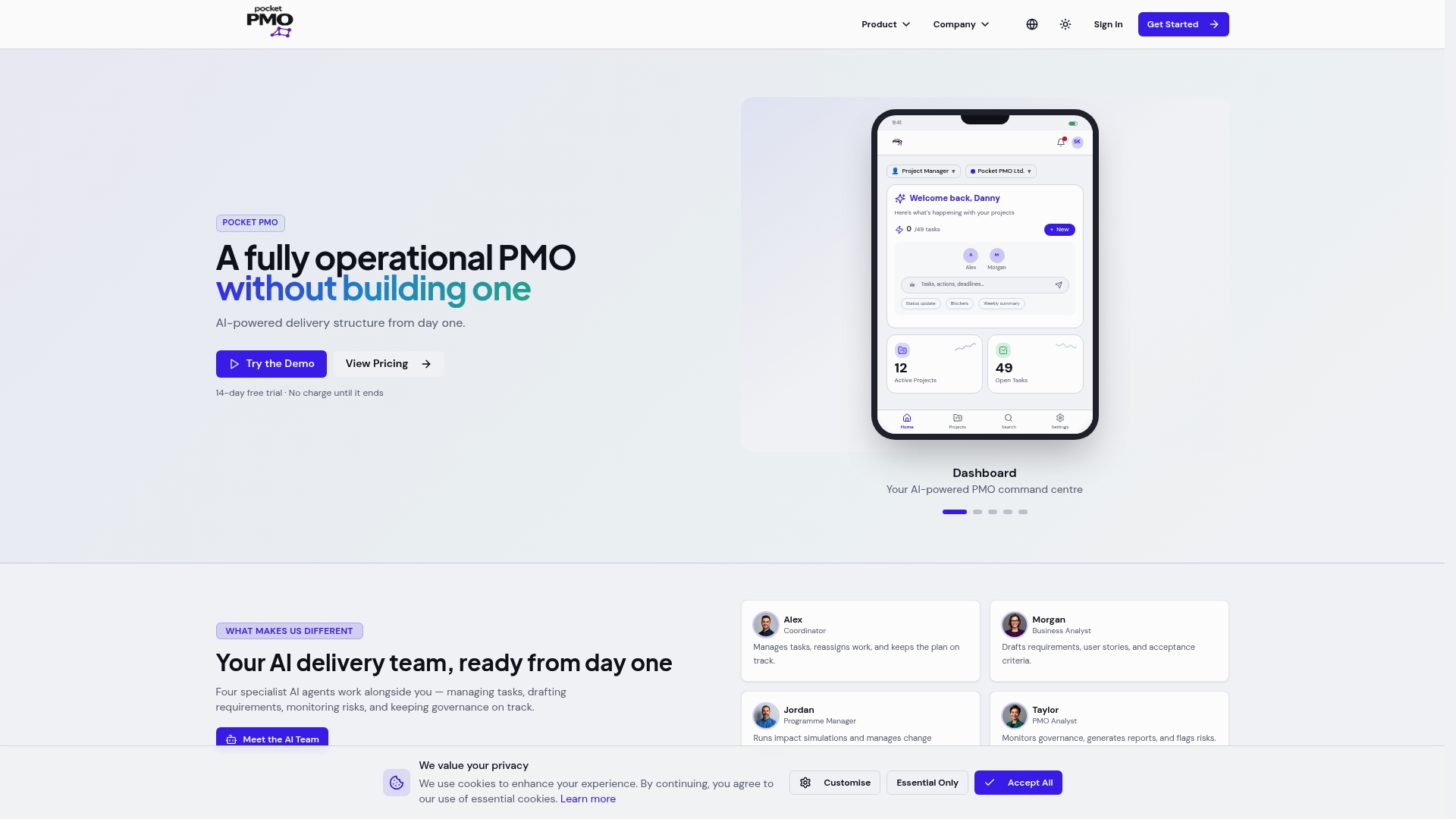
Pocket PMO integrates structured proposal workflows directly into your project management environment, so you are not managing templates in isolation. The platform's AI-driven tools guide you through each proposal section, flag missing information, and connect your proposal data to live project tracking from the moment of approval. You can explore the full range of smart template features to see how automated documentation and intelligent prompts reduce the time your team spends on proposal preparation while improving the quality of every submission. Request a demo and see structured proposals working in practice.
Frequently asked questions
What is the main purpose of a project proposal template?
A project proposal template structures critical project details into a consistent format, making proposals easier to review and significantly increasing the likelihood of approval. Standardised templates are directly linked to better stakeholder communication and higher on-time completion rates.
How can templates help avoid project delays?
Templates ensure all key elements are captured before a project begins, preventing delays caused by missing information or stakeholder misalignment. Organisations using formal proposal templates report significantly higher on-time completion compared to those without structured processes.
What should be included in a project proposal template?
Every effective template should include objectives, scope, timeline, budget, risk assessment, and success criteria. More complex projects benefit from adding a stakeholder map, assumptions log, and a benefits realisation plan.
How often should project proposal templates be reviewed or updated?
Review your templates after every significant project and at least once per year. Regular updates ensure the template reflects current organisational priorities, governance requirements, and lessons learnt from recent delivery.
Recommended
- Pocket PMO | A fully operational PMO without building one
- Pocket PMO | A fully operational PMO without building one
- Pocket PMO | A fully operational PMO without building one
- Pocket PMO | A fully operational PMO without building one
- Streamline operations with innovative software solutions – Nu Life Digital
- How to Streamline Workflows Using DocuSign Templates