
Running multiple projects at once is one of the most demanding challenges in modern project delivery. Only 31% of projects are fully successful, and 50% fall short on value delivery. When you multiply that risk across a portfolio of concurrent projects, the consequences of poor visibility, fragmented processes, and reactive risk management compound quickly. This article walks you through the full multi-project management process, from preparation and tooling to step-by-step execution and ongoing verification, with AI-powered approaches woven in at every stage to help you deliver more, risk less, and lead with confidence.
Table of Contents
Key Takeaways
| Point | Details |
|---|---|
| AI-powered visibility | Real-time dashboards and analysis make it far easier to oversee complex project portfolios. |
| Avoid common pitfalls | Consistent processes, quality data, and clear stakeholder alignment are essential for success. |
| Iterative improvement | The most effective PMOs blend human expertise, AI tools, and ongoing learning to maximise value. |
| M.O.R.E. drives results | Combining Methods, Outcomes, Resources, and Experience can triple your multi-project success rates. |
What makes multi-project management complex?
Managing a single project is hard enough. Managing five, ten, or twenty simultaneously introduces a different class of problem entirely. The challenges are not simply additive; they are multiplicative.
At the heart of the difficulty are three persistent obstacles:
-
Resource conflicts: The same people, budgets, and systems are pulled in multiple directions at once, creating bottlenecks that slow every project they touch.
-
Stakeholder alignment: Different sponsors, business units, and delivery teams each have their own priorities, making consistent communication and decision-making genuinely difficult.
-
Cross-project dependencies: A delay in one project can cascade into several others, especially when shared outputs or infrastructure are involved.
Spreadsheets and ad-hoc processes simply cannot keep pace with this complexity. They offer a static snapshot at best, and by the time a risk or conflict is visible, the damage is often already done. You can explore how this plays out across project management use cases to see the real-world patterns.
“PMO maturity increases success rates by 38%, yet only half of projects deliver their full value.”
The M.O.R.E. approach (Methods, Outcomes, Resources, Experience) offers a structured lens for addressing these gaps. It frames multi-project management not as a juggling act but as a discipline with four interconnected pillars that, when applied together, dramatically improve delivery outcomes.
Uncertainty is also a factor that is frequently underestimated. Real projects do not follow neat plans. Dependencies shift, requirements change, and risks emerge from unexpected directions. Without a process designed to absorb and respond to that uncertainty, even well-resourced teams struggle.
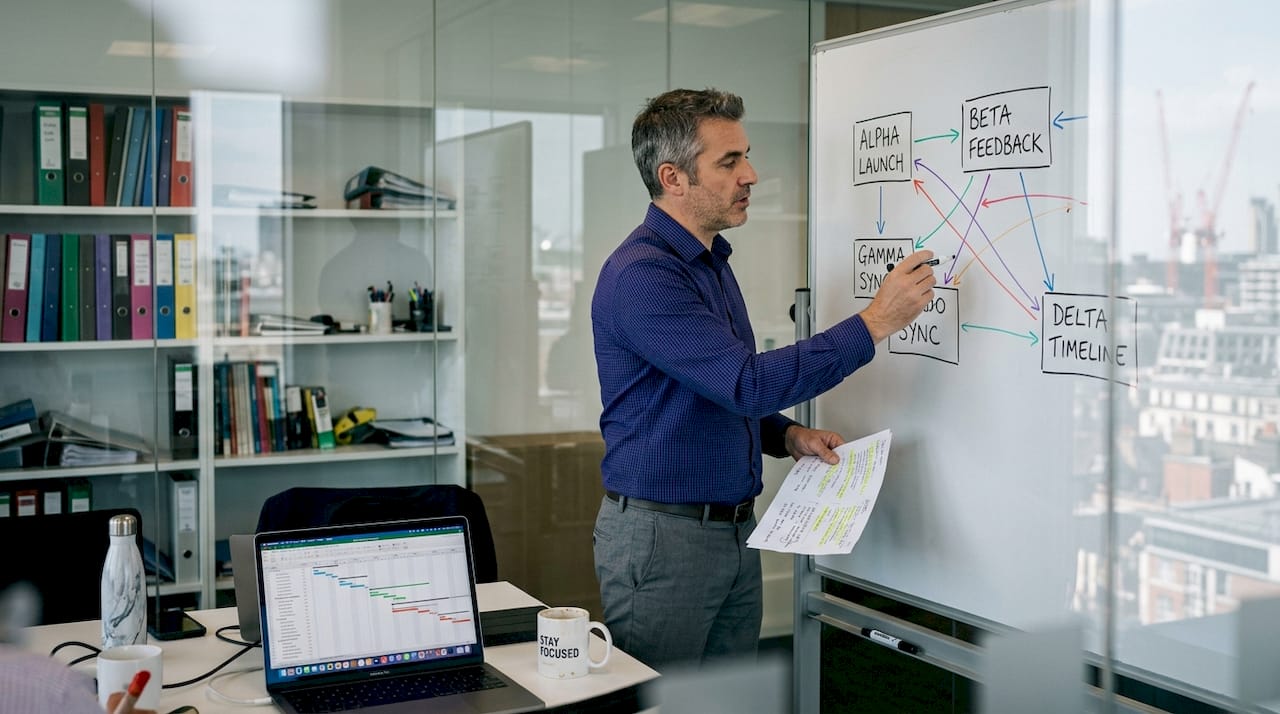
Pro Tip: Map cross-project dependencies before any project kicks off. Identifying shared resources and handoff points early is the single fastest way to reduce downstream risk and prevent avoidable delays across your portfolio.
Essential tools and preparation for multi-project success
With the challenges clearly understood, the next priority is equipping your PMO or project management function with the right tools and organisational foundations. AI augmentation can dramatically improve outcomes, but only when the underlying setup is sound.
AI enhances visibility via real-time dashboards, increases efficiency, and strengthens risk management with predictive analytics. However, those benefits depend entirely on the quality of data flowing into the system and the maturity of the processes surrounding it.
Here is a summary of the core tools your multi-project environment needs:
| Tool category | Purpose | AI-enhanced capability |
|---|---|---|
| PPM platform | Centralise project data and governance | Automated status reporting and alerts |
| Resource management suite | Track and allocate people and budgets | Predictive capacity planning |
| Risk and RAID management | Log, assess, and escalate risks | Early warning signals and risk scoring |
| Real-time dashboards | Portfolio-wide visibility | Dynamic KPI tracking and trend analysis |
| Collaboration tools | Team communication and task tracking | AI-assisted task prioritisation |
Beyond technology, your organisation also needs to be ready. A checklist for readiness includes:
-
Data quality: Clean, consistent, and timely data across all projects.
-
Process maturity: Defined workflows for change requests, status reporting, and escalation.
-
Executive support: Senior sponsorship for PMO governance and AI adoption.
-
Team capability: Project managers trained to interpret AI outputs and act on them.
-
Integration: Systems that share data rather than operate in silos.
You can review the full range of AI-powered PPM features to understand what a mature toolset looks like in practice. For broader context, the AI for portfolio management resources offer useful benchmarks.
Pro Tip: Before rolling out any AI-enhanced PPM solution, audit your data sources. Inconsistent or incomplete data will produce misleading insights, regardless of how capable the AI engine is. Data quality is not a technical afterthought; it is a strategic prerequisite.
Step-by-step multi-project management process
With tools and readiness in place, here is a concrete six-step process for setting up and running a high-performing multi-project environment.
-
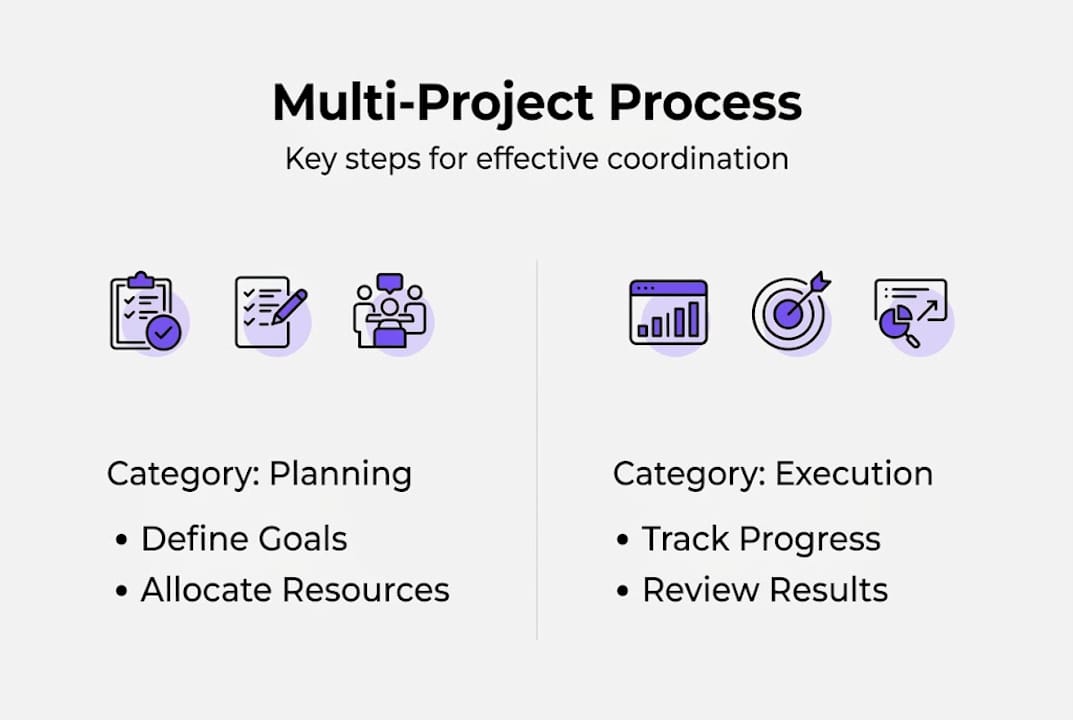
Set foundations: Define governance structures, reporting cadences, and escalation paths before any project begins. Agree on the tools and data standards every project will follow.
-
Profile projects: Capture objectives, scope, dependencies, risks, and resource requirements for each project. Create a consistent baseline that enables fair comparison and prioritisation.
-
Centralise data: Bring all project data into a single platform. Fragmented data is the root cause of most visibility failures. A PMO setup and install process should include data migration and integration from day one.
-
Automate oversight: Use AI to monitor status, flag deviations, and generate reports automatically. This frees your team to focus on decisions rather than data collection.
-
Scenario plan and prioritise: Model different resource allocation and sequencing options to identify the best path forward. AI-driven scenario planning gives you confidence that manual planning simply cannot match.
-
Iterate and improve: Review outcomes, capture lessons learned, and refine your process continuously. Multi-project management is not a one-time setup; it is an ongoing discipline.
The difference between manual and AI-enhanced execution at each stage is significant:
| Stage | Manual approach | AI-enhanced approach |
|---|---|---|
| Oversight | Weekly status meetings | Real-time automated alerts |
| Risk detection | Reactive, after impact | Predictive, weeks in advance |
| Scenario planning | Spreadsheet modelling | Dynamic, data-driven simulation |
| Reporting | Manual compilation | Auto-generated dashboards |
“Predictive AI can identify emerging risks up to three weeks before project leads become aware of them, giving teams the window they need to intervene effectively.”
AI users achieve 25% higher efficiency and report an 85% confidence level in scenario planning, compared to just 46% for those relying on manual methods. That gap is not marginal; it is the difference between reactive and proactive project delivery.
Common mistakes and how to verify project portfolio success
Even with a solid process and capable tools, multi-project environments can still fall short. Knowing where teams typically go wrong is just as valuable as knowing what to do right.
The most common mistakes include:
-
Ignoring cross-project dependencies: Treating each project as isolated leads to cascading delays that could have been prevented with a shared dependency register.
-
Underestimating communication coordination: With multiple stakeholders across multiple projects, inconsistent messaging creates confusion and erodes trust quickly.
-
Failing to maintain data discipline: AI and dashboards are only as useful as the data behind them. Teams that skip updates or allow data drift lose visibility fast.
-
Lack of stakeholder buy-in: Without active executive support, governance frameworks are ignored and escalation paths collapse under pressure.
-
Overloading resources without visibility: Assigning the same people to too many concurrent tasks without tracking utilisation leads to burnout and missed deadlines.
To verify genuine improvement rather than just activity, focus on these KPIs:
-
On-time and on-budget delivery rate (target: 80% or above)
-
Value realisation percentage across the portfolio
-
Risk incident frequency and resolution time
-
Stakeholder satisfaction scores
-
Project failure rate (target: below 10%)
High-performing PMOs are 2.5x more likely to deliver successfully and achieve a 94% net project success score. That level of performance is not accidental; it reflects disciplined application of the M.O.R.E. approach and consistent investment in benchmarking KPIs for multi-projects.
Capability development is also iterative. Executive support, expertise, and resilience are all required to sustain improvement over time. No single tool or process change delivers lasting results without organisational commitment behind it.
Pro Tip: Schedule a monthly AI-powered portfolio review to assess KPI trends, identify emerging risks, and recalibrate priorities. Treat it as a standing governance event, not an optional check-in.
Our perspective: Why AI alone won’t fix multi-project management
Here is an uncomfortable truth that is worth stating plainly: AI will not rescue a poorly organised PMO. We have seen organisations invest in sophisticated platforms and still fail to improve outcomes, because the underlying data was unreliable, the processes were inconsistent, and the teams were not empowered to act on what the AI surfaced.
The technology is genuinely powerful. AI can spot risks earlier, automate reporting, and model scenarios faster than any manual process. But quality data and iterative learning are prerequisites, not optional extras. Without them, AI simply accelerates bad decisions.
What actually drives lasting improvement is the combination of capable tools, disciplined processes, human judgement, and executive commitment. The soft skills, knowing when to escalate, how to align stakeholders, and when to challenge a plan, matter just as much as the technology. You can find key lessons on AI-powered management that reinforce this balance.
The teams that consistently outperform are not the ones with the most advanced AI. They are the ones who use AI to sharpen decisions they were already making well.
How Pocket PMO helps you master multi-project management
Putting these principles into practice requires a platform built for exactly this challenge. Pocket PMO delivers an AI-powered PMO from day one, without the months of setup that traditional solutions demand.
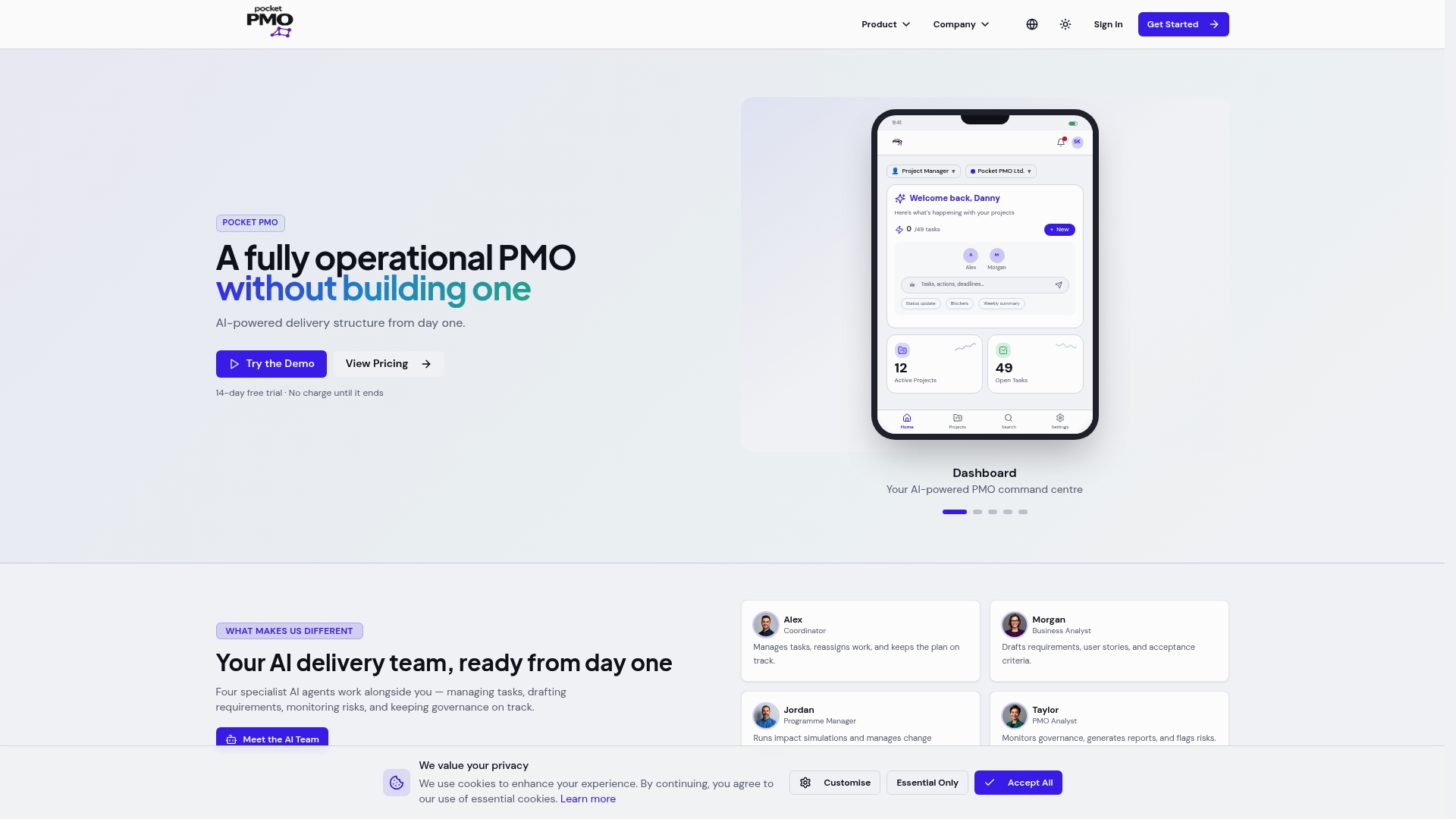
With Pocket PMO, you get real-time dashboards, predictive risk analysis, automated reporting, and a dedicated AI delivery team working alongside you from the start. Whether you are managing five projects or fifty, the platform scales to your needs and adapts to your workflows. Start with a quick-start PMO solution, explore platform features in detail, or schedule an AI team demo to see exactly how it works in your environment.
Frequently asked questions
What is the difference between multi-project and portfolio management?
Multi-project management focuses on coordinating several related projects efficiently, while portfolio management aligns all projects with organisational strategy to maximise overall value. AI enhances both by improving visibility, efficiency, and risk management across the full scope.
How does AI improve visibility and efficiency in project management?
AI provides real-time dashboards, automates data analysis and reporting, and predicts risks before they escalate into issues. AI users report a 25% efficiency gain and significantly higher confidence in scenario planning compared to manual approaches.
Why do so many multi-project environments still fail?
The primary causes are poor data quality, inconsistent processes, and weak stakeholder alignment rather than a lack of tools. Only 31% of projects are fully successful, but mature PMOs using best practices deliver 38% more value.
What are the most important KPIs for tracking multi-project success?
Key KPIs include on-time and on-budget delivery rate, value realisation percentage, and risk incident frequency across all active projects. High performers meet goals 80% or more of the time and keep failure rates below 10%.
What is the M.O.R.E. approach and how does it increase project success?
M.O.R.E. stands for Methods, Outcomes, Resources, and Experience; it is a structured framework for building PMO capability across all four dimensions. Applying it consistently can boost delivery to a 94% net success score, compared to the industry average of just 31%.