

Missed deadlines, shifting priorities, and teams pulling in different directions are frustrations that every project manager knows well. Without a clear, structured roadmap, even well-resourced projects can drift off course before the first milestone is reached. The good news is that the right roadmap template can change this entirely. Case studies show 83% on-time delivery improvement when organisations adopt structured roadmap approaches. This guide walks you through why templates matter, how to choose the right type, how to build one from scratch, and how to avoid the pitfalls that derail even experienced PMOs.
Table of Contents
- Why roadmap templates matter in modern PMOs
- Types of roadmap templates: Choosing the right approach
- Building your roadmap template: Step-by-step instructions
- Common pitfalls and how to avoid them
- Our perspective: Why the 'perfect' template is always evolving
- Next steps: Power your PMO with modern roadmap tools
- Frequently asked questions
Key Takeaways
| Point | Details |
|---|---|
| Outcome-focused roadmaps | Prioritising goals over features in your template drives clear project alignment and success. |
| Continuous iteration | Treat your roadmap as a living document, updating it regularly for the best results. |
| Major efficiency gains | Adopting the right template can improve on-time project delivery by up to 83 percent. |
| Template flexibility | Customise your roadmap for your project’s stage and requirements, not as a rigid checklist. |
Why roadmap templates matter in modern PMOs
Low PMO maturity is still a widespread challenge. Only 22% of PMOs operate at high maturity levels, which means the majority of project offices are still working reactively rather than strategically. Roadmap templates offer a practical way to close that gap without requiring a full organisational overhaul.
The numbers speak clearly. Structured roadmaps have been linked to up to 83% improvement in on-time delivery and an 11% reduction in customer churn. In manufacturing and technology sectors, Industry 4.0 roadmaps reduce time-to-market by 30 to 50% and cut maintenance costs by 10 to 40%. These are not marginal gains. They represent a genuine shift in how projects are planned and delivered.
| Metric | Without roadmap template | With roadmap template |
|---|---|---|
| On-time delivery rate | Variable, often below 60% | Up to 83% improvement |
| Time-to-market | Standard delivery cycles | 30 to 50% faster |
| Maintenance costs | Uncontrolled | 10 to 40% reduction |
| Team alignment | Fragmented priorities | Clear, shared objectives |
"A roadmap is not just a planning tool. It is a communication device that aligns every stakeholder around what matters most and when."
Without a template, teams frequently encounter missed dependencies, unclear ownership, and competing priorities. Work gets duplicated. Risks go untracked. Sponsors lose confidence. These are not signs of poor talent. They are signs of poor structure.
Following roadmap template best practices helps PMOs move from firefighting to forward planning. The benefits include:
- Clearer visibility across delivery horizons
- Faster onboarding for new team members
- Consistent reporting to stakeholders
- Reduced rework caused by missed dependencies
- Greater confidence in delivery commitments
Exploring real PMO use cases confirms that organisations across sectors, from financial services to infrastructure, see measurable results when they standardise their roadmap approach. The template itself is not magic. The discipline it creates is.
For a deeper grounding in what separates effective roadmaps from ineffective ones, roadmap best practices offer a solid evidence base to build from.
Types of roadmap templates: Choosing the right approach
Understanding their value, it is critical to choose the template type that actually accelerates delivery. Not every roadmap format suits every project, and picking the wrong one can create as many problems as having no template at all.
The main categories worth knowing are:
- Timeline-based templates suit projects with clear, sequential dependencies. They work well when you have fixed deadlines, regulatory milestones, or phased delivery commitments.
- Now-Next-Later templates are ideal when uncertainty is high. Rather than committing to specific dates, they organise work by relative priority and readiness.
- Outcome or goal-based templates focus on what you want to achieve rather than what you plan to build. These are strongly recommended for PMOs because they keep teams focused on value rather than activity.
- Theme-based templates group initiatives by strategic theme, making it easier for senior stakeholders to see how work connects to organisational objectives.
As outcome-based approaches consistently outperform feature-centric lists, the shift from "what we are building" to "what we are achieving" is one of the most impactful changes a PMO can make.
| Template type | Best for | Key strength |
|---|---|---|
| Timeline-based | Fixed deadlines, regulated projects | Dependency clarity |
| Now-Next-Later | High uncertainty, agile environments | Flexibility |
| Outcome-based | Strategic PMOs, portfolio management | Value alignment |
| Theme-based | Executive reporting, multi-project | Strategic coherence |
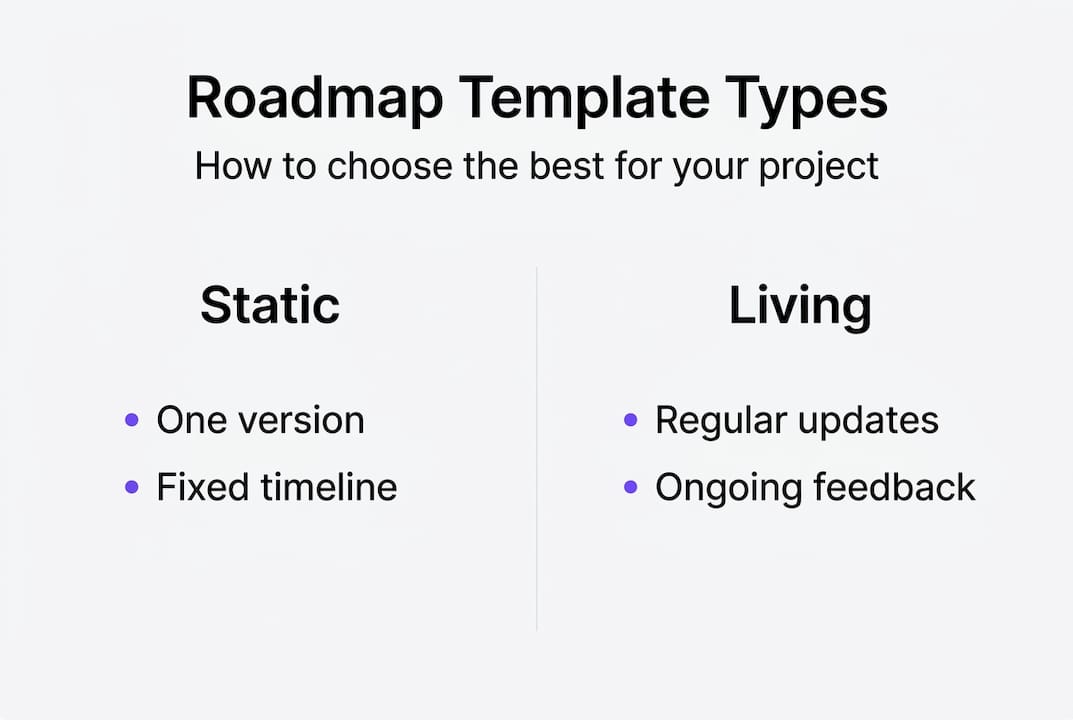
One distinction that often gets overlooked is static versus living documents. A static roadmap is created once and referenced occasionally. A living roadmap is updated regularly, reflects real-time changes, and becomes a genuine source of truth for the team. Living roadmaps consistently outperform static ones in complex environments.

Pro Tip: Before selecting a template type, ask yourself one question: "Will stakeholders understand what success looks like from this roadmap?" If the answer is no, move towards an outcome-based format.
The PMO roadmap features available in modern platforms now support all major template types, making it straightforward to switch formats as your project context evolves. For organisations managing security or compliance workstreams, security roadmap alignment adds another layer of structure worth considering.
Building your roadmap template: Step-by-step instructions
Once you have selected an approach, here is how to actually build and tailor the right template for your PMO.
Preparation first. Before touching any tool or template, define your desired outcomes, gather requirements from key stakeholders, and confirm which template type fits your context. Skipping this step is the single most common cause of roadmap failure.
- Lay out your delivery horizons. Divide your roadmap into short, medium, and long-term horizons. This multi-horizon structure prevents the common mistake of over-specifying the future while under-planning the near term.
- Prioritise initiatives using a scoring method. The RICE framework (Reach, Impact, Confidence, Effort) is a reliable, data-driven prioritisation approach that removes guesswork and reduces political bias in planning conversations.
- Link dependencies, assign owners, and set milestones. Every initiative on your roadmap should have a named owner and a clear connection to any upstream or downstream work. Unowned items drift.
- Use visual cues for status and risk. Colour coding, RAG (Red, Amber, Green) status indicators, and milestone markers make your roadmap scannable at a glance. Stakeholders should not need a briefing to understand the current state.
- Iterate frequently. Best practice in roadmap planning is continuous iteration, not annual updates. Build a review cadence into your governance calendar from day one.
Statistic to note: Organisations using structured prioritisation report significantly faster decision-making and fewer escalations to senior leadership.
Pro Tip: Use your first roadmap iteration as a conversation starter, not a final answer. Share a draft early, gather feedback, and refine. The process of building the roadmap together creates alignment that the document alone cannot.
For teams starting from scratch, reviewing cybersecurity roadmap steps offers a useful parallel process that applies across many project types. When you are ready to move from planning to action, the launch process at Pocket PMO is designed to get you operational quickly.
Common pitfalls and how to avoid them
Even the best templates go astray if you do not sidestep the most common failure modes. Knowing what to watch for is half the battle.
The most damaging pitfall is building a feature-centric roadmap instead of a theme or outcome-driven one. Feature lists tell teams what to build but not why. Without the "why", motivation drops and stakeholder confidence erodes.
Other common mistakes include:
- Micromanaging detail. Roadmaps are strategic tools, not task lists. Over-specifying every sub-task turns a roadmap into a Gantt chart and removes its strategic value.
- Ignoring dependencies. Failing to map what depends on what leads to surprise blockers and cascading delays that could have been anticipated.
- Treating the template as static. A roadmap that is not updated regularly becomes a historical document, not a planning tool.
- Skipping stakeholder buy-in. Without upfront agreement from sponsors and key team members, even a well-designed roadmap will face resistance at the first sign of change.
- Underestimating change resistance. Teams accustomed to informal planning often push back on structured templates. Address this early by involving them in the design process.
"The roadmap that nobody updates is worse than no roadmap at all. It creates false confidence and delays the honest conversations that drive real progress."
Pro Tip: Schedule a 30-minute roadmap review into every sprint or monthly governance cycle. Keeping it brief and regular is far more effective than a quarterly deep-dive that nobody prepares for.
For PMOs managing multiple concurrent projects, multi-project management adds complexity that makes these pitfalls even more costly. Standardising your template approach across the portfolio is one of the fastest ways to reduce that risk.
Our perspective: Why the 'perfect' template is always evolving
Here is something the planning guides rarely say plainly: there is no universally perfect roadmap template. Any PMO chasing a fixed, final format is solving the wrong problem.
The organisations that consistently outperform their peers do not have better templates. They have better habits around their templates. They review them regularly, update them honestly, and use them as conversation tools rather than compliance documents. The format matters far less than the culture around it.
What we have seen across roadmap template adoption in varied organisations is that the teams who treat their roadmap as a living framework, open to challenge and refinement, deliver better outcomes than those who treat it as a finished product. Flexibility is not a weakness in roadmap design. It is the point.
Roadmaps should bring people together around shared outcomes, not give managers another box to tick. When your template serves the team rather than the other way around, you will know it is working.
Next steps: Power your PMO with modern roadmap tools
If you are ready to apply these ideas, modern platforms now make it easier than ever to implement roadmap templates and realise the benefits from day one.
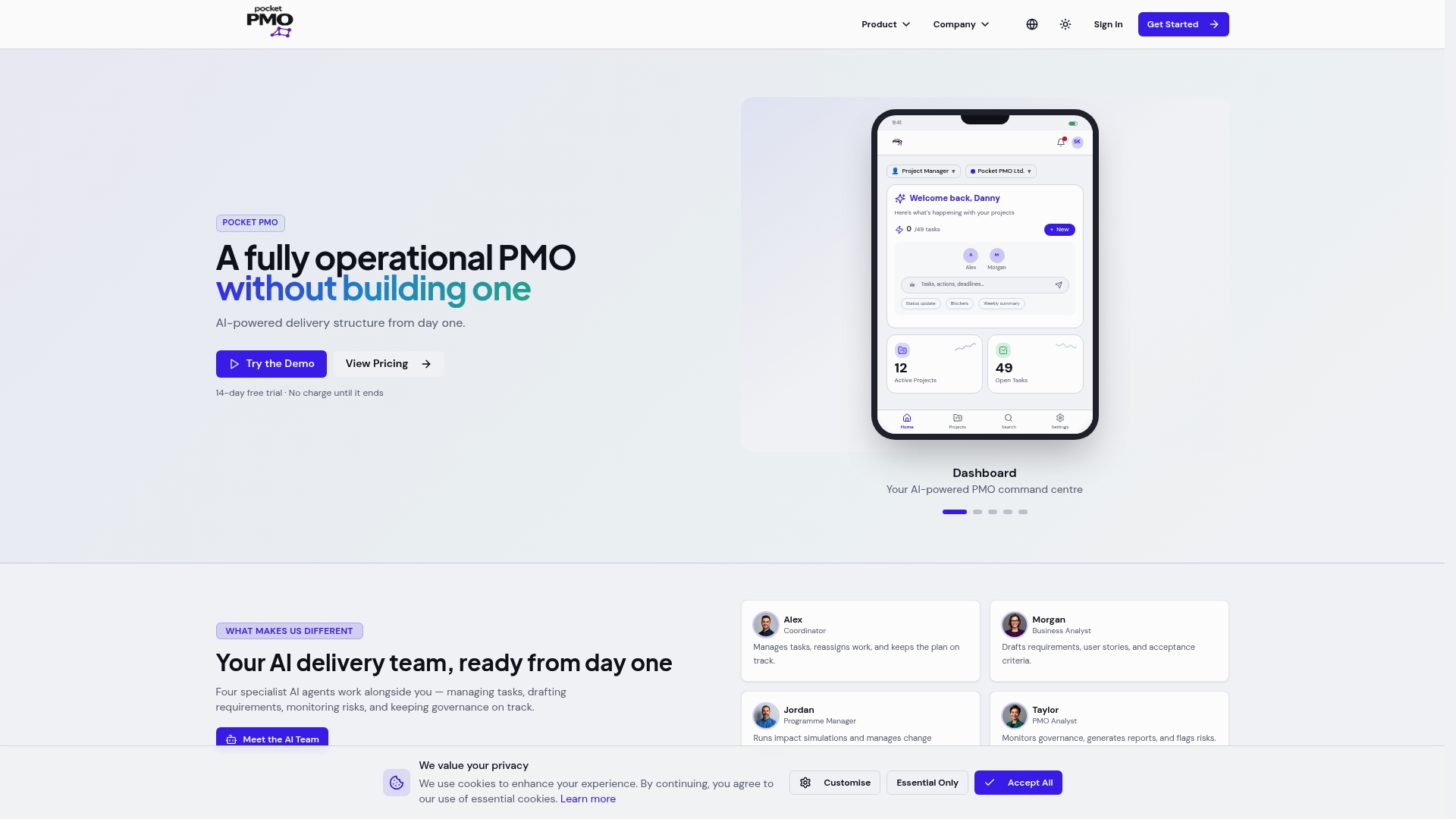
Pocket PMO offers ready-to-use, outcome-driven roadmap templates designed for every PMO maturity level. Whether you are building your first structured roadmap or standardising across a complex portfolio, the platform supports seamless adoption, live updates, and full customisation. Explore the feature overview to see how AI-powered tools integrate with your roadmap workflow, or book a quick PMO launch session to get hands-on support from day one. Your next on-time delivery starts here.
Frequently asked questions
What is the best structure for a project roadmap template?
The best structure is outcome or goal-based, supporting multi-horizon planning and frequent iteration. Outcome-based approaches consistently outperform feature lists by keeping teams focused on value delivered rather than tasks completed.
How often should a roadmap template be updated?
A roadmap template should be updated at least monthly, or with every major project change, to stay relevant and actionable. Treating your roadmap as a living document rather than a static file is the single most effective habit a PMO can build.
What efficiency improvements can I expect from using a roadmap template?
Case studies show up to 83% improvement in on-time delivery and a 30 to 50% reduction in time-to-market with the right roadmap template in place.
Should I use a static or a living template for my PMO?
A living template is best as it supports ongoing changes and team feedback. Living documents outperform static files in every complex project environment where priorities and risks shift regularly.
Recommended
- Pocket PMO | A fully operational PMO without building one
- Pocket PMO | A fully operational PMO without building one
- Master the multi-project management process: boost success
- Pocket PMO | A fully operational PMO without building one
- Managing Information Technology Projects in the AI Era Effectively - Heights Consulting Group
- Gestion de projet TPE/PME : guide complet 2026