
Consolidating portfolio tracking, real-time reporting and risk analysis across multiple projects creates friction when project portfolio management software either restricts features for public sector work or burdens users with manual report preparation. Most alternatives demand custom pricing conversations or lack embedded AI-driven governance, slowing onboarding and complicating procurement for teams needing compliance-ready oversight. This comparison lets you weigh embedded analytics, automation support and pricing transparency so you can select a platform that fits your organisation's delivery workflow without hidden evaluation delays.
Table of Contents
- Pocket PMO
- Project Portfolio Office (PPO)
- Verto
- Comparative Analysis of Project Portfolio Management Software Platforms
Pocket PMO
At a Glance
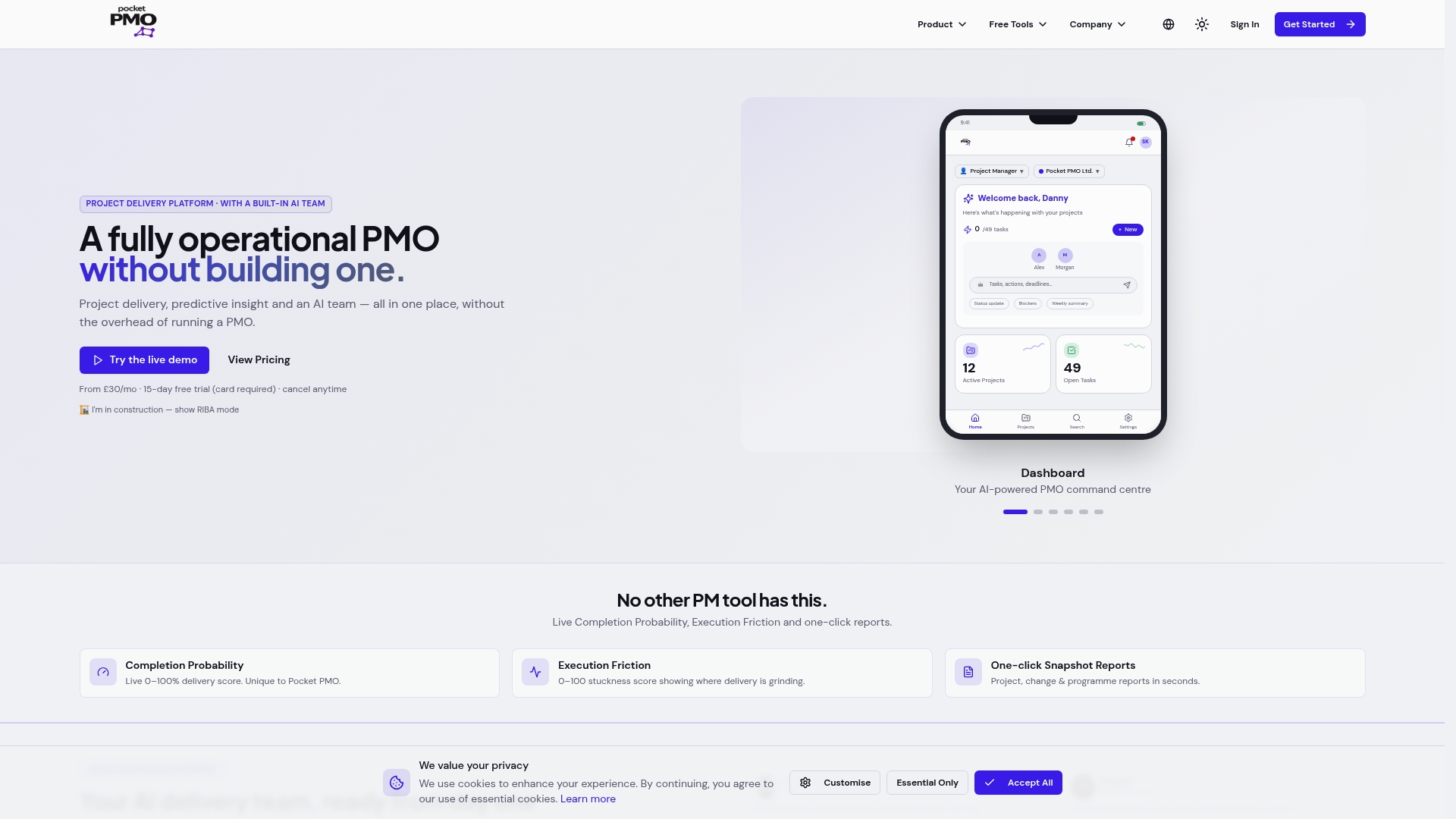
The vendor advertises a built-in AI team that manages tasks, risks and governance with an approval-first workflow rather than handing full automation to the system. This product pairs that capability with live project health scores and one-click reporting for delivery professionals.
Core Features
Real-time project health scores give a snapshot of completion probability and execution friction across projects so you can prioritise attention quickly.
One-click snapshot reports produce branded status, change and programme updates ready for stakeholders. The platform also offers portfolio management, change request workflows, status reporting and team collaboration tools.
Predictive risk analysis and impact simulation let you model change consequences before implementation. Pocket PMO is available on web and mobile and includes intelligent automation to speed routine delivery tasks.
Key Differentiator
The single differentiator is the embedded AI delivery team that continuously proposes actions, drafts documents and flags risks while keeping human approval in the loop. That setup delivers predictive scores alongside operational suggestions tailored to delivery workflows.
Pros
-
Faster stakeholder reporting. The one-click snapshot reports remove manual slide and spreadsheet prep so PMs spend less time polishing updates and more time resolving issues.
-
Proactive risk sightlines. Predictive risk analysis and impact simulation help you test change scenarios before they affect milestones.
-
Operational assistance from day one. The built-in AI team can draft tasks, propose mitigations and manage routine governance with approval control, reducing initial PMO setup overhead.
-
Portfolio visibility. Real-time dashboards and portfolio management features let PMOs compare project health and allocate attention where expected value is at risk.
-
Industry-specific support. A RIBA edition and optional Microsoft 365 integration make the product useful for construction teams and organisations that rely on Microsoft tooling.
Cons
- Reliance on AI proposals may not fit organisations that require human-only decision chains; approval workflows mitigate this but some governance models may resist the approach.
Notable Integrations
Microsoft 365 is available as an optional integration. Some features, particularly document flows and calendar synchronisation, can require a full integration setup to function smoothly with existing Microsoft environments.
Who It's For
Delivery professionals, PMOs, project managers and consultancies that want predictive analytics built into everyday delivery work. It suits teams that will accept an approval-first AI assistant and those running multi-project portfolios including construction RIBA workflows.
Unique Value Proposition
A dedicated AI-powered delivery team that manages tasks, requirements and risks from day one changes how you staff a PMO. Rather than hiring to build a PMO playbook, you get an operational layer that suggests actions, runs approval-first processes and generates stakeholder-ready reports.
Real World Use Case
A construction delivery team uses Pocket PMO to track RIBA-stage milestones, run impact simulations before approving scope changes and produce branded stakeholder reports each month. The AI team drafts mitigation actions which the project manager reviews and approves, saving several hours per reporting cycle.
Pricing
Plans start at £30 per month for individual users. Small team pricing begins at £120 per month for up to five users. Larger organisations receive custom pricing tied to scale and required integrations.
Website: https://pocketpmo.co.uk
Project Portfolio Office (PPO)
At a Glance
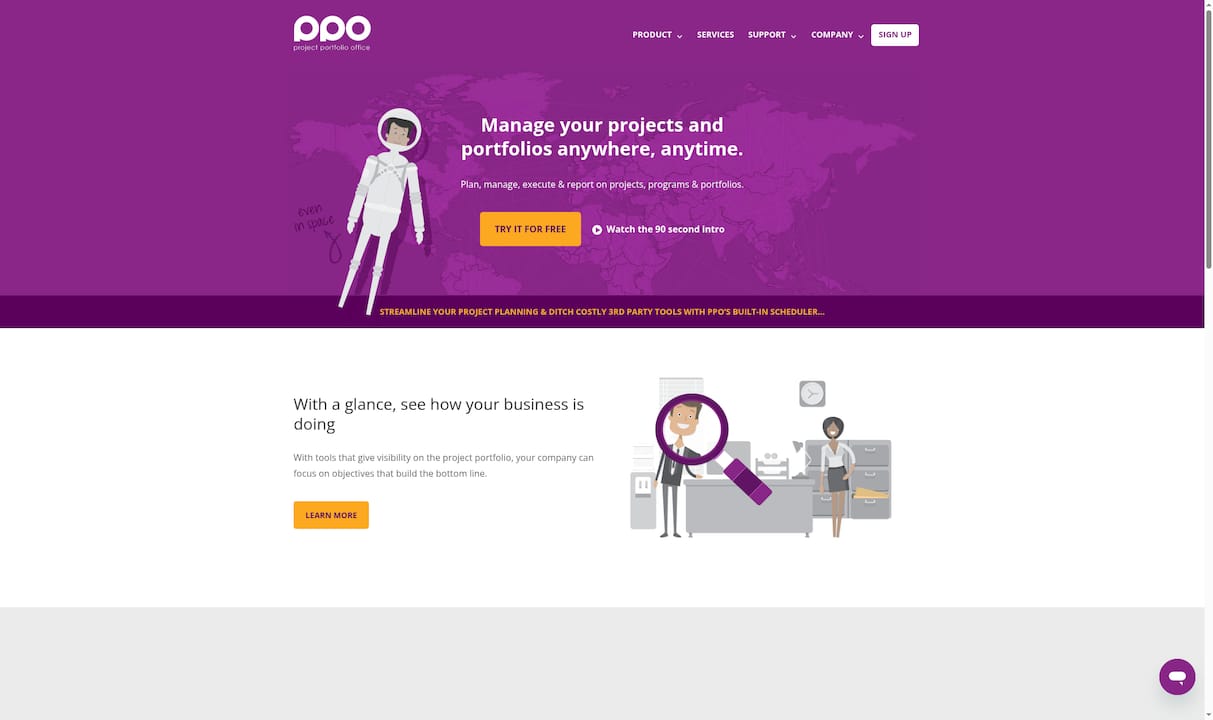
PPO's marketing materials report a 4.6/5 on G2, a figure that helps explain its enterprise focus and positioning. The vendor describes an enterprise SaaS aimed at giving a single source of truth for portfolios while supporting PMI, PRINCE2 and Agile methods.
Core Features
PPO centralises project, programme and portfolio data into a single source of data for visibility across business units. That core aims to reduce duplicate status requests and manual consolidation.
- Real time professional reporting and dashboards for executives and PMOs.
- Support for Agile, Waterfall and hybrid delivery models plus portfolio, demand, resource and cost management.
- Scheduler and Gantt planning, document and knowledge storage, automation and workflow support, and APIs for connectivity.
Key Differentiator
What sets PPO apart is the combination of a built in scheduler with deep analytics on the same platform. Rather than moving schedules into a separate reporting tool, PPO keeps planning, forecasting and KPI analysis together for faster governance cycles and consolidated executive reports.
Pros
-
High user sentiment: the marketing materials state a 4.6/5 G2 rating, which suggests strong customer satisfaction among reviewers.
-
Enterprise portfolio control: portfolio, programme and demand management features support multi department rollouts and governance frameworks.
-
Integration friendly: API support and configurable fields let you map PPO to financial systems and HR tools without rebuilding workflows.
-
Fast onboarding: the vendor claims an intuitive UI that reduces training time and helps sponsors adopt the system quickly.
-
Methodology coverage: native support for PMI, PRINCE2 and Agile means you can run mixed delivery approaches from the same instance.
Cons
-
No public pricing: the vendor does not publish pricing, which slows procurement and budgeting conversations.
-
Smaller public footprint: fewer third party reviews compared with major PPM vendors, suggesting a narrower market presence.
-
Sparse third party detail: the available materials give limited specifics on advanced integrations and certain feature behaviours.
When It May Not Fit
If your procurement team requires transparent list pricing up front, PPO will frustrate the early evaluation stage because pricing is not disclosed. If you rely on broad public community reviews to select vendors, the comparatively small review volume may make risk assessment harder.
Who It's For
Large organisations and corporate PMOs that need a configurable enterprise grade project portfolio management system. It fits buyers who want consolidated planning, governance reporting and a scheduler tied directly to analytics.
Real World Use Case
A multinational uses PPO to pull project data from finance, IT and R&D, then generate consolidated monthly reports for the executive board and audit trails for compliance. The integrated scheduler reduces cross team plan drift and shrinks report preparation time.
Pricing
Pricing is not publicly available and the product data lists pricing as not applicable. Prospective buyers must request a quote from the vendor and factor in a discovery or demo to obtain commercial terms.
Website: https://go2ppo.com
Verto
At a Glance
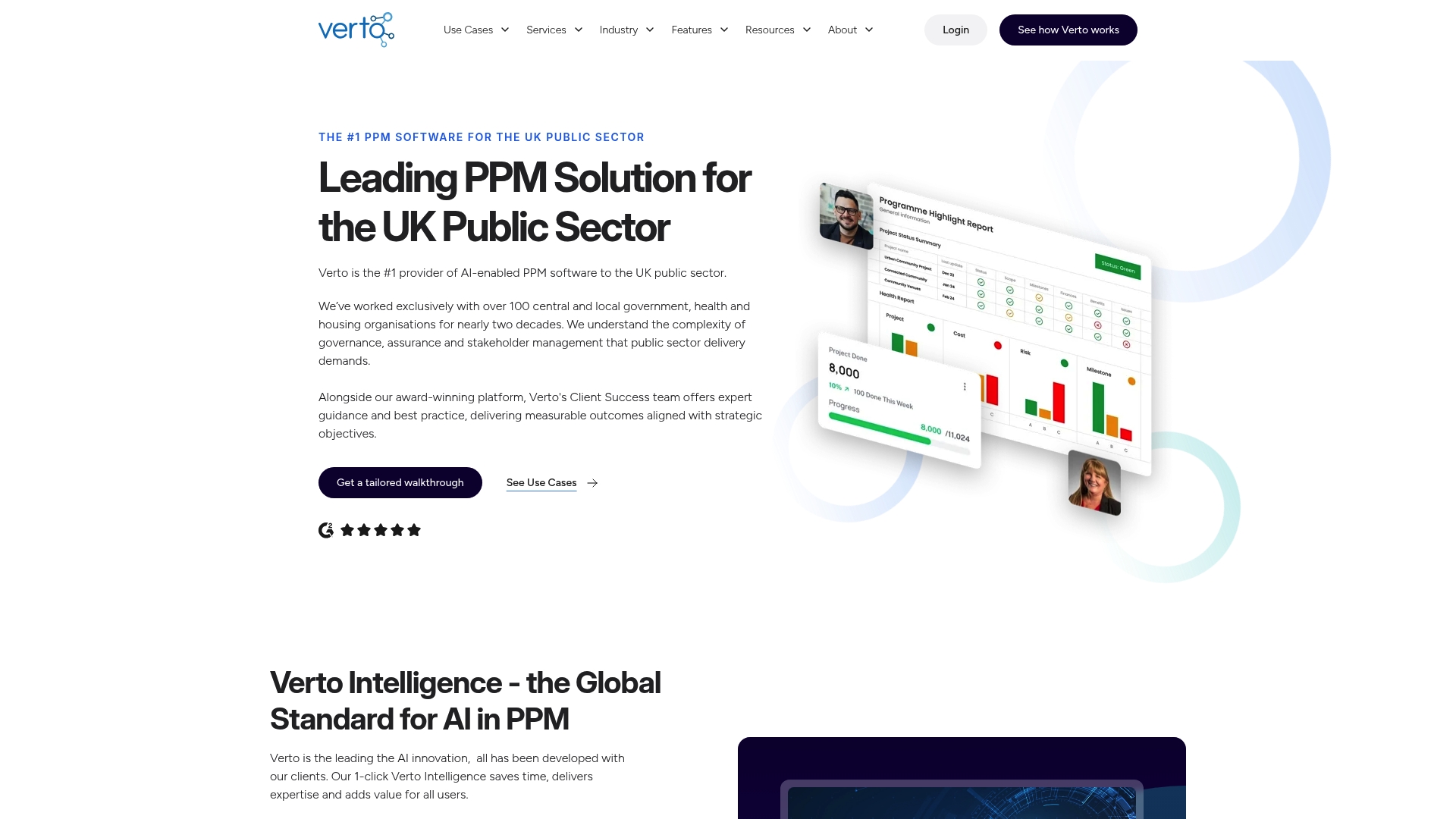
The vendor reports being trusted by over 100 public sector organisations, a notable scale for a UK focused PMO platform. Verto combines portfolio, programme and project views with AI powered insights and strong compliance features aimed at government and health clients.
Core Features
- One platform for portfolio, programme and project visibility across multiple delivery layers.
- Automated reporting with dashboards that present live status for governance meetings and board packs.
- Workflow automation to reduce manual approvals and record audit trails.
- Integrated planning with milestones, dependencies and risk registers to support decision making.
- Resource and capacity management for demand forecasting and workload balancing across teams.
Key Differentiator
Verto is built specifically for UK public sector needs, emphasising evidence of impact, audit readiness and alignment to government standards. Its focus on compliance and configurable governance workflows sets it apart from generic project tools, while the vendor layers AI powered signals on top of core PPM functions.
Pros
- Deep public sector expertise helps shape templates, controls and reporting formats that match common funding and audit requirements.
- High configurability means teams can model local governance structures rather than forcing a one size fits all process.
- The AI powered insights give earlier warning of risk patterns which is useful for governance reviews and escalation.
- Supports work beyond classic projects so transformation programmes and business as usual activities coexist in one view.
- Security and audit features reduce the effort of preparing evidence for inspections or grant reviews.
Cons
- There is limited third party review data available, so independent user sentiment is unclear.
- Pricing is not published; procurement requires direct engagement for a tailored quote which lengthens evaluation timelines.
- Configuration depth can be heavy for smaller or less mature organisations without dedicated PMO support.
When It May Not Fit
If your organisation needs transparent, off the shelf pricing for quick procurement then Verto will feel slow because quotes are customised. Small councils with a single project office and no change management resource may find the configuration overhead disproportionate.
Notable Integrations
- Microsoft 365 for document and identity integration.
- Teams for notifications and collaboration within existing communication flows.
Who It's For
Public sector leaders, PMOs and project teams in government, health and housing that require compliant reporting, evidence based impact records and configurable governance. Best for organisations with cross departmental delivery and formal audit obligations.
Real World Use Case
A UK local authority uses Verto to bring its disparate projects into a single portfolio, automate status reporting for cabinet papers and preserve audit trails. That adoption reduced time spent preparing monthly reports and improved visibility for senior sponsors.
Pricing
Pricing is not published. The vendor provides custom quotes that vary by organisation size, selected modules and contract length. Expect a procurement conversation rather than a fixed online price.
Website: https://vertocloud.co.uk
Comparative Analysis of Project Portfolio Management Software Platforms
For professionals and organisations evaluating project portfolio management solutions, understanding the nuanced distinctions between platforms can significantly enhance decision-making. Each product offers unique benefits based on workflow preferences, scale, and specific industry requirements.
Integration Depth and Ecosystem Compatibility
Examining the capacity for systems integration, Pocket PMO offers optional Microsoft 365 integration, which complements teams already invested in the Microsoft ecosystem. In comparison, PPO provides broader API support and configurable fields, making it adaptable to a variety of external systems such as financial and HR tools. While Pocket PMO focuses on enhancing reporting and governance workflows within its integrated environment, PPO’s flexibility may better serve organisations requiring extensive customisation.
Industry-Specific Adaptations
When evaluating alignment with industry-specific needs, Verto excels in supporting public sector workflows through compliant reporting and audit features tailored for government and health entities. Alternatively, Pocket PMO’s focus on construction with RIBA-stage tracking demonstrates applicability to organisations in architecture and construction industries. This highlights a key difference: Verto’s domain expertise is more generalised for the public sector, whereas Pocket PMO provides applications tailored to identified industry frameworks.
Best Fit Scenarios
- For teams requiring rapid initial setup and assistance from day one, Pocket PMO provides a built-in AI delivery team for proactive task and risk management.
- For enterprises focused on customising workflows to sync with financial and HR systems, PPO provides adaptable integration options, though its lack of transparent pricing requires additional consideration during procurement.
- For governments and health organisations prioritising audit compliance and consolidated programme views, Verto offers configurable governance workflows directly aligned with regulatory mandates.
Our Pick
Pocket PMO distinguishes itself as the most suitable choice for organisations seeking an integrated AI-driven platform capable of providing tailored assistance and insights. This recommendation stems from its specific applicability to multi-project portfolios and industries like construction. However, organisations requiring extensive configurability or centred around public-sector prerequisites might find greater value in PPO or Verto respectively.
Project Portfolio Management Software Comparison
Discover which project portfolio management platform provides the best balance of features, integration capabilities, and tailored usability for your professional needs.
| Product | Core Feature | Key Differentiator | Pricing | Notable Limitation |
|---|---|---|---|---|
| Pocket PMO | Predictive risk analysis and one-click reporting | Embedded AI delivering tailored operational suggestions | £30/month individual, £120/month for up to 5 users | AI reliance may not suit human-exclusive governance preferences |
| Project Portfolio Office (PPO) | Centralised project data and reporting | Scheduler integrated with analytics | Not disclosed | Lack of public pricing complicates early-stage procurement |
| Verto | AI-driven insights and compliance workflows | Focus on UK public sector requirements | Not disclosed | Configuration depth may overwhelm less mature organisations |
Choose Pocketpmo for Smarter Project Management Office Solutions
Finding the right projectmanagementoffice.org.uk alternatives can feel overwhelming when balancing governance, risk management and stakeholder reporting. Pocketpmo addresses these challenges by deploying an AI-powered delivery team that supports your entire project portfolio with real-time health scores and one-click reporting. This reduces manual effort and enables proactive risk analysis that helps you make confident decisions faster.
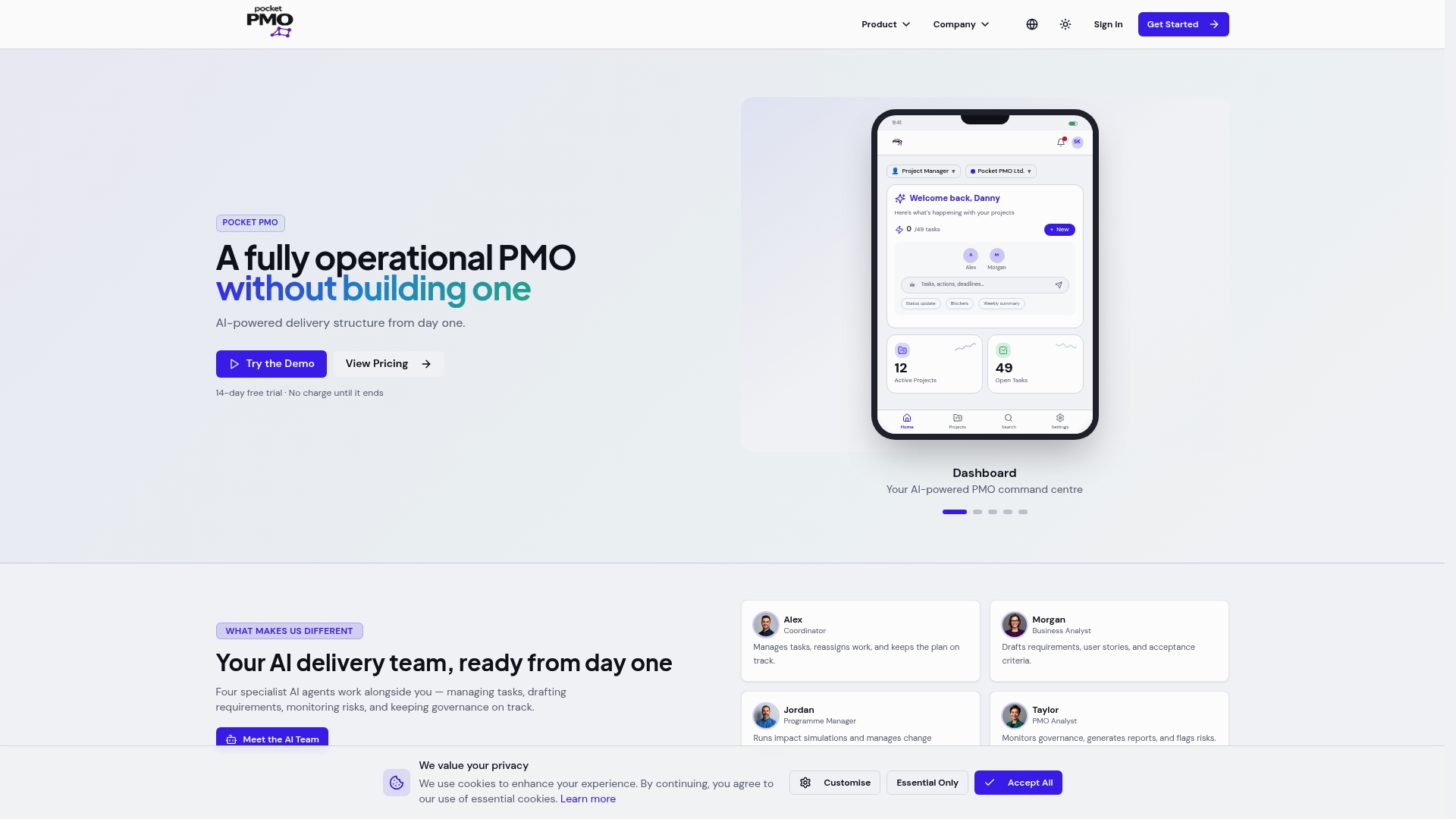
Experience how Pocketpmo can transform your PMO workflows today. Visit the Pocketpmo home page and discover AI-driven portfolio oversight designed to fit complex environments. Take control by letting our intelligent automation draft critical tasks and generate stakeholder-ready reports in moments, saving you valuable time each reporting cycle.
Frequently Asked Questions
What unique features does Pocket PMO offer for reporting?
Pocket PMO provides one-click snapshot reports that eliminate manual slide and spreadsheet preparation, allowing project managers to spend more time resolving issues. This feature helps create branded status and programme updates ready for stakeholders efficiently. Users can expect to streamline their reporting processes significantly by adopting Pocket PMO.
How does predictive risk analysis work in Pocket PMO?
Pocket PMO includes predictive risk analysis and impact simulation, enabling teams to model change consequences before implementing them. This functionality is particularly beneficial for identifying potential risks early, allowing project managers to take proactive measures. Incorporating this tool can significantly enhance overall project execution.
What is the difference between Pocket PMO and PPO regarding pricing transparency?
PPO does not publish its pricing openly, which can lead to delays in procurement conversations, while Pocket PMO starts at £30 per month for individual users. If you prefer a clear pricing structure from the start, Pocket PMO provides that upfront, making it easier to budget for a project management solution.
Can I integrate Pocket PMO into my existing Microsoft tools?
Yes, Pocket PMO offers optional integration with Microsoft 365, allowing seamless utilisation of existing document flows and calendar synchronisation within a familiar environment. This feature supports teams already invested in the Microsoft ecosystem, enhancing overall productivity.
What sector-specific support does Pocket PMO provide?
Pocket PMO offers an industry-specific RIBA edition and is designed for construction teams, making it highly suitable for those following RIBA workflows. This targeted support can simplify project management for construction professionals who regularly navigate these stages.